Shop Support
Call our helpdesk team or send us an e-mail. We are pleased to be at your disposal.

Pandinavia is going climate neutral.
As of this year, Pandinavia is a climate neutral company, offsetting its carbon emissions with our partner ClimatePartner. Another new development is that our customers now have the option of a voluntary climate action contribution ordering of their promotional items.
Voluntary climate action contribution.
Join us in helping to reduce the concentration of greenhouse gases. We have already begun. How about you – here’s your chance to do your bit for the environment as well.
What does climate neutrality mean?
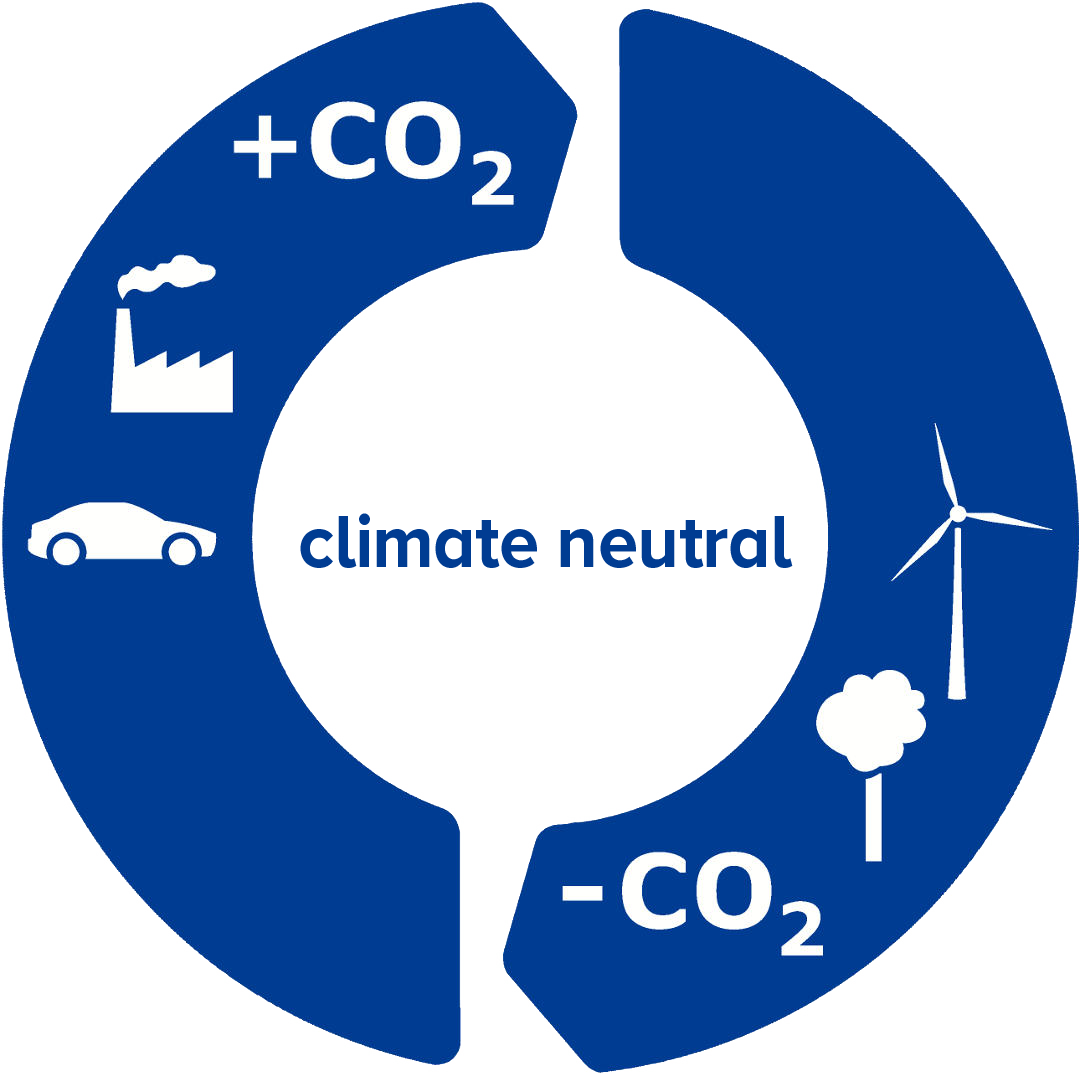
Companies, products and processes are termed “climate neutral” if they have their carbon emissions calculated and offset them by funding internationally recognized climate protection projects. By engaging in carbon offsetting, the product or company in question attains the status of climate neutrality.
Along with avoidance and reduction of carbon emissions, offsetting is an important step in comprehensive climate protection. Regardless of where they are first generated, greenhouse gases, e.g. CO2, then disperse uniformly throughout the atmosphere, so they are present in approximately the same concentrations all over the planet. This means that emissions that cannot be avoided in one location can be offset through climate protection projects at another, a practice which contributes towards a global reduction of greenhouse gas concentrations.
Climate protection projects
Pandinavia AG has chosen to support three different climate protection projects: the supply of clean drinking water in Madagascar, biogas production in Suzhou and rainforest protection in Brazil.
Drinking water project in Madagascar
Only five percent of the rural population in Madagascar has access to drinking water - the rest get their water from open wells dug by hand that tend to be shallow. This water is often contaminated, with the result that that diarrhoea is often a deadly disease, one responsible for the high mortality rate among infants, for instance. Boiling water offers some protection. Most people here can only do this over an open fire.
This climate protection project established a simple and inexpensive water supply system that uses solar pumps. Water from deep, properly drilled wells is pumped into elevated water tanks. These supply public wells and sanitary facilities and also crop irrigation systems. Five villages, with 6,500 inhabitants, have already been connected to this water supply.
The project prevents the CO2 emissions that are unavoidable when boiling water. Above all though, it prevents diseases – diseases that have long been eliminated elsewhere in the world – while enabling farmers to cultivate their fields, provide for their livestock and feed themselves and their families.
The project creates annual savings of 10,000 tonnes of CO2 emissions that would otherwise be generated by the use of firewood to boil water.
Biogas in Suzhou, China
The landfill gas plant uses gases released through the decay of organic material to generate electricity. The project developer is the Everbright Environment and Energy Suzhou Landfill Gas to Energy Co. Ltd. The landfill gas plant captures the gases (methane) released at the landfill site and burns them in a cogeneration station. The electricity generated is fed into the local power grid to supply China's rapidly growing energy demand. Thus, the plant helps secure the supply of electricity to the local population. Using waste products to generate electricity is a sound alternative to burning coal, which currently accounts for 80% of the electricity generated in China.
According to its builder’s verified figures, the plant produces an average of 23,314 MWh of electricity annually. This corresponds to an annual savings of 114,383 tonnes of CO2 emissions. The project meets the criteria for a Gold Standard project.
Rainforest protection in Pará, Brazil
The várzea in Pará by the Amazon estuary forms a unique ecosystem. Marajó Island is crisscrossed by waterways; smallholders have farmed its land for centuries. As a transport artery, the Amazon favours agriculture and livestock breeding – and these bring ever more deforestation.
The Ecomapuá project protects the forest and prohibits commercial deforestation over an area of 90,000 hectares. The project creates alternative sources of income for the 94 families living in this area, such as trade in açaí berries. Popular in Brazil, this fruit is also increasingly in demand as a superfood in industrialized countries. Since it promotes development in one of the poorest regions in north-eastern Brazil, the project has been certified with the Social Carbon Standard, as well as the Verified Carbon Standard. Preservation of 90,000 hectares of rainforest, annual savings of 145,000 tonnes of carbon emissions.

Call our helpdesk team or send us an e-mail. We are pleased to be at your disposal.