A ballpoint pen, a tote bag, or a USB stick with a company logo. Everyone knows these items, and most of them end up somewhere in a drawer. Still, companies rely on these small promotional items year after year. Why? Because giveaways can work if used correctly. The difference between a forgotten promotional item and an effective giveaway lies not in the budget, but in the thinking behind it. A well-thought-out giveaway creates a connection to the brand, fits the situation, and stays present with the recipient. It requires neither luxury nor quantity, but relevance. Those who understand when and how such objects unfold their effect can create lasting impressions with small things.
Why giveaways are often underestimated
Many companies treat giveaways as a side issue. Something you just do because everyone else does. Order a few hundred pens, put a logo on them, done. In doing so, they underestimate the potential these small objects hold. A well-chosen promotional gift can build a relationship between brand and person that goes beyond the moment of handover.
Small objects often create recurring contact
A notebook on the desk, a water bottle in a backpack, or a keychain on a set of keys. These items accompany their owner daily. Every time someone reaches for the pen or refills the bottle, the logo reappears. These recurring contacts are valuable because they feel unobtrusive and natural. No one feels pressured, yet the brand remains present. The frequency of touchpoints depends on how useful the item is in everyday life:
- An item used daily creates more contact than a decorative object
- The longer the usage duration, the more sustainable the advertising effect
- Practical items are often passed on to others, increasing reach
Short-term visibility is easy, long-term memory is not
At a trade fair, you see hundreds of booths, talk to dozens of exhibitors, and collect information material. After a few hours, everything blurs together. But when you return home and use an item from the event a week later, you remember the situation again. The object reactivates the memory. However, this only works if the giveaway is actually used. A cheap disposable item ends up in the trash before any memory can form. Long-term presence comes from quality and usefulness, not from mere distribution.
Giveaways as a moment of direct interaction
The value of a promotional gift does not arise in a warehouse or catalog. It arises at the moment when two people meet and an object changes hands. This interpersonal component is often overlooked, yet it makes the crucial difference.
The first contact between two people matters more than the object
When someone stops at a booth and starts a conversation, something important happens: a first impression is formed, a brief connection. The giveaway handed over at the end becomes a symbol of this interaction. It represents not only the brand but also the person who handed it over and the nature of the interaction. Several factors play a role:
- Was the conversation authentic and on equal footing?
- Did the other person take time and show genuine interest?
- Was the promotional gift selected to match the conversation?
- Did a connection arise beyond pure information exchange?
Ultimately, the human factor determines whether an item is perceived as a valuable gift or just another promotional product.
Context determines value, not purchase price
A simple tote bag can be more valuable than an expensive gadget if it is given at the right time and place. Example: Someone attends a conference and has no bag to carry collected materials. A tote bag with a logo solves an immediate problem. The recipient is grateful, uses it immediately, and may continue using it for a long time. An expensive technical toy that nobody needs, on the other hand, disappears into obscurity. Context makes the difference. A suitable giveaway responds to a situation and thereby creates real value.
What distinguishes a promotional item from a good giveaway
Not every promotional gift is the same. Some companies focus on quantity and distribute as many cheap items as possible. Others concentrate on well-thought-out solutions that truly resonate with recipients. The difference lies in the strategy.
Relevance beats quantity
Distributing a thousand pens, of which 900 end up in the trash, is less effective than a hundred high-quality notebooks that are actually used. Relevance arises when an item fits the target audience. A technology company may succeed with USB sticks or cable organizers. A sustainable brand is better off offering reusable water bottles or beeswax wraps. The target audience must be able to identify with the object. The following considerations help with selection:
- What needs does the target audience have in everyday life?
- What values do they associate with the brand?
- Which items fit the industry or product?
- Is there a current trend that can be leveraged?
Useful items do not end up in drawers
An item that fulfills a real purpose is kept and used. A useless item is discarded. It’s that simple. The best giveaways are those that fill a gap. A good umbrella, a practical backpack, a high-quality notebook. Such items accompany people for months or years. They are not perceived as advertising but as helpful companions. Some categories have proven particularly effective:
- Stationery and office supplies used daily
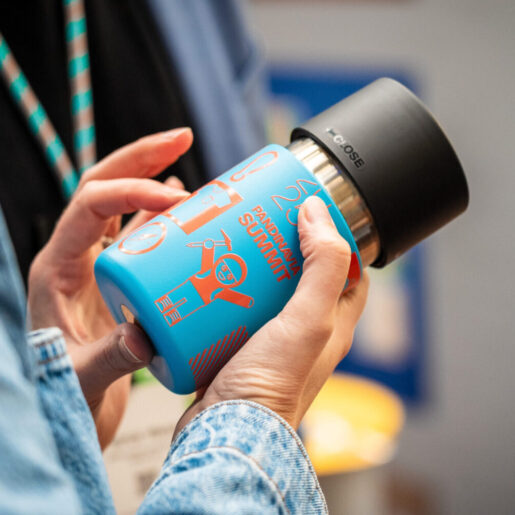
- Water bottles and thermal mugs for on the go
- Bags and backpacks for transport and travel
- Technical accessories such as charging cables or power banks
- Sustainable everyday helpers such as reusable cutlery or lunch boxes
The logo is present, but not intrusive. The brand is associated with usefulness and quality rather than cheap promotions.
Use giveaways where people actually interact
Not every situation is suitable for promotional gifts. They are most effective where real interactions and conversations take place. Anonymous mass distribution without context is usually ineffective.
Trade fairs, events, and consultations create closeness
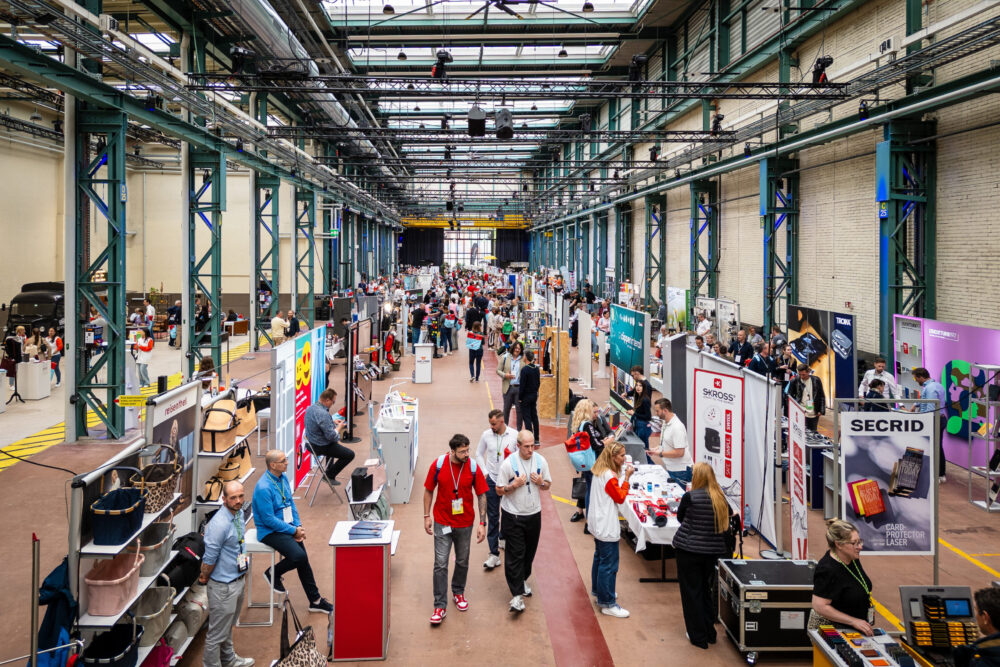
At trade fairs and events, people with specific interests meet companies. They actively seek information, solutions, or inspiration. In this environment, giveaways can demonstrate their strength. They become part of a conversation, demonstration, or consultation. The promotional gift is then not an isolated marketing measure, but an element of interaction. In consultations, a suitable object can reinforce what is said or symbolize a solution. In product presentations, it can round off the experience. Personal handover creates a connection that is often missing in the digital world.
Actions remain memorable when they make situational sense
A customer event, an anniversary, or the launch of a new product are ideal occasions for thoughtful giveaways. They mark a special moment and make it tangible. Example: A company celebrates its 50th anniversary and gives high-quality thermal bottles to long-term customers. The bottle becomes a symbol of the enduring relationship. Another example: At the opening of a new location, the first visitors receive a special edition of a product. Such actions create emotion and remain memorable because they tell a story. Successful event giveaways share the fact that they honor the occasion, match the target audience, and establish a connection to the brand.
The right timing for a giveaway
Timing is crucial, because a promotional gift given at the wrong time feels misplaced or random. At the right time, it reinforces a message and creates impact. The right moment arises when the object enhances a situation instead of interrupting it. It should feel like a logical addition, not a forced promotional insert. When a giveaway comes exactly when it is needed or appreciated, its perception changes fundamentally: from a promotional item to a useful companion.
When an object complements an existing conversation
The best moment for a giveaway is when it supports ongoing communication. When a topic arises in conversation that the object relates to, a natural connection is formed. For example, someone mentions that they travel frequently. A high-quality travel set with a logo is then perceived as appropriate.
Not every event needs a giveaway
Sometimes less is more. Not every event requires a promotional gift. If the situation does not justify it or if the budget does not allow for a truly good item, it is better to refrain. A poor or unsuitable giveaway harms the image more than it helps. It is better to use them selectively and focus on quality. A single well-thought-out gift at an important occasion leaves a stronger impression than mass-distributed cheap items at every opportunity.
Giveaways as part of a brand strategy
Promotional gifts should not be random but part of a bigger picture. They can convey brand values, reinforce messages, and strengthen positioning.
Small items with a clear role
A giveaway works best when it has a clear function in communication. Should it convey sustainability? Then recycled or biodegradable materials are the right choice. Should it represent innovation? Then technical gadgets or smart everyday helpers may fit. Should it express value? Then high-quality craftsmanship and timeless design matter. The purpose defines the selection:
- Consider which message should be conveyed
- Include the target audience and their values
- Take the company’s product or service into account
- Prioritize long-term impact over short-term effect
Brands stick to things that last
People associate brands with experiences and objects. A durable, high-quality promotional gift becomes a positive memory. It stands for reliability and appreciation. A cheap disposable item, on the other hand, signals indifference. The choice of giveaway reflects how a company sees its customers. Those who give high-quality, useful items show respect and interest. Those who distribute mass items indiscriminately risk being perceived as interchangeable.
How Pandinavia selects and implements giveaways
At Pandinavia, the process begins with a conversation. Products are not simply chosen from a catalog; instead, what truly fits is developed together with the client. This approach distinguishes thoughtful solutions from standard products. Questions about target audience, occasion, and brand values flow directly into product selection. The goal is to understand the context in which the object will be used and what message it should convey. The result: giveaways that are not only appreciated but actually used.
Selection based on occasion and target audience
Every project is different. A technology company requires different solutions than a sports association. A trade fair demands different considerations than a customer event. Pandinavia takes these differences into account and selects products accordingly. Several factors play a role:
- Which target audience should be reached?
- What is the specific occasion?
- What message should the promotional gift convey?
- What is the budget, and how can it be used optimally?
- What requirements exist regarding sustainability or materials?
Solutions are created through dialogue, not from a catalog
There are many standard solutions, but truly suitable ones emerge through dialogue. Pandinavia relies on consultation and exchange to understand what the client actually needs. Sometimes these are classic promotional items, sometimes innovative ideas or customized products. Their years of experience and broad network make it possible to realize even unusual requests. The result: giveaways that truly work because they are thoughtful, relevant, and high-quality.